November 26th 2026
How do engineering students move from learning process theory to understanding how plant operations work in practice?
At the University of Coimbra, a purpose-built Virtual Control Room (VCR) gives students a place to explore process behaviour, control systems and operational teamwork through simulation.
Installed in the university’s Chemical Engineering building, the facility is designed to support learning across multiple engineering disciplines. Its layout recreates key elements of a working control room, giving students practical experience with the systems and communication used in plant operations.
A shared space for practical learning
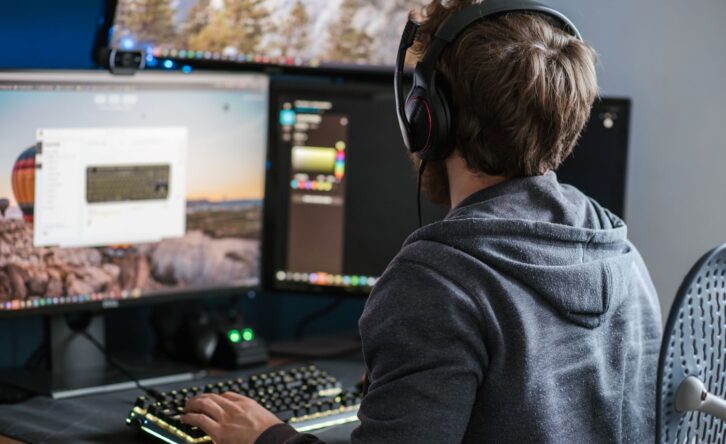
The VCR includes two trainer PCs and four trainee PCs connected over a local network. The room is equipped with custom desks, a Voice over IP phone system, radios, wall-based alarm displays and a speaker system that can play realistic plant sounds.
These features help create a connected learning environment. Students can work at the control room consoles, communicate as a team and observe how process conditions and alarms change as they interact with the simulations. Trainers can guide sessions around different topics, from advanced control methods to the fundamentals of process equipment.
A separate virtual 3D environment extends the experience beyond the control room. Using a dedicated PC, a field operator can connect with the control room, helping students explore how field and control room activities relate to one another.
The 3D environment is in a separate room, which enables students acting as control room operators to understand and practice communication with field operators and engineers via radios.
From individual equipment to complete process systems
The Coimbra installation includes a broad range of dynamic process simulations. Students can work with individual equipment and unit operations, including separators, compressors, valves, level control, condensers, evaporators and heat exchangers. The available models also include more complex systems such as an amine system, crude column, fractionation train and advanced reactor.
This range gives the university flexibility to introduce process concepts at different levels of complexity. Students can build their understanding of equipment and control before exploring how multiple parts of a process interact.
Connecting engineering knowledge with operations
By combining dynamic simulation, a realistic control room and a virtual field environment, the University of Coimbra VCR creates opportunities for students to learn by doing. They can explore process operations and control in a structured, simulated setting, with trainers able to shape sessions around the subject being taught.
The project shows how simulation can support engineering education by bringing process behaviour, control room teamwork and field operations together in one learning environment.
A versatile system with room for expansion
The VCR system was installed in 2023, and in 2026 TSC supplied additional simulation models to expand teaching of renewable energy related subjects – a biogas production simulator and a new 3D simulation model for Green Hydrogen production by electrolysis. This was added during a visit by TSC including training on the new models.
Find out more: Explore TSC’s Virtual Control Room and read the University of Coimbra case study.
#VirtualControlRoom #ProcessSimulation #EngineeringEducation #ProcessTraining #DynamicSimulation #ChemicalEngineering #ControlRoomTraining #SimulationBasedLearning